


Last Human: Final Stand
4.897.00 Reviews
App Specs
- Version
- 2.50.11
- Updated On
- License
- Free
- Downloads
- 100,000+
- Developer
- Iterflor Pte Ltd
- Categories
- Strategy
- Platform
- Android
Screenshots
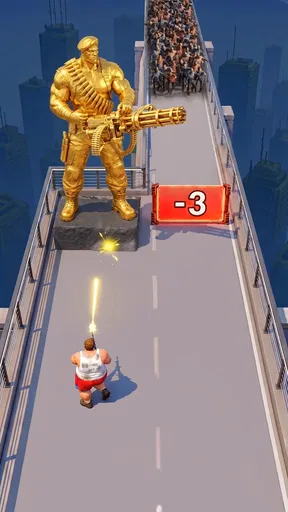
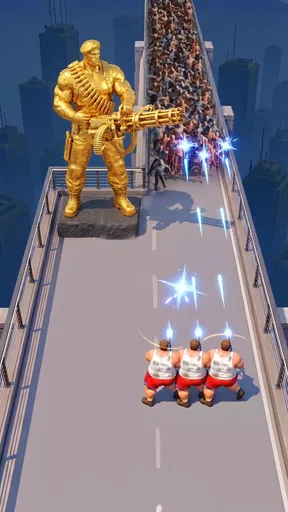
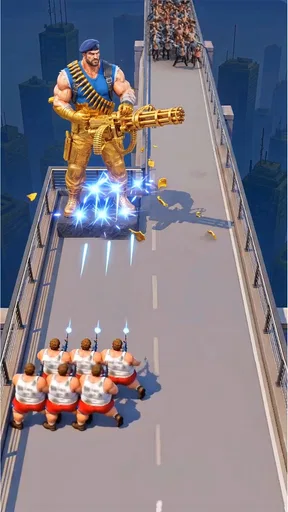
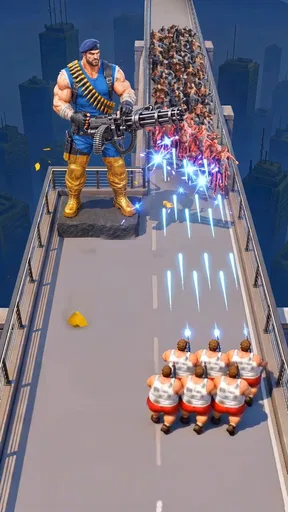
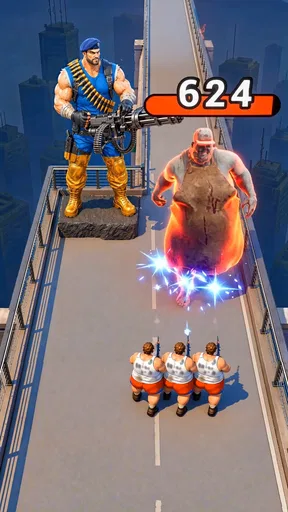
 Analysis by AppCompare
I spent time with Last Human: Final Stand as a mobile strategy game built around the familiar tension of surviving a zombie outbreak. Its central appeal is easy to understand: you are pushed into a desperate situation, asked to make practical choices, and expected to keep going when every mistake makes the next encounter harder. That premise gives the game an immediate identity, but the real question is whether its goals, unlocks, challenge, and pacing are strong enough to hold attention after the first few sessions.
My answer is mixed but useful. I found the game most appealing when I treated each session as a short attempt to improve my next decision rather than as a relaxed, endlessly expanding strategy experience. It has the right atmosphere for players who enjoy survival pressure and zombie combat, yet it does not feel like the best choice for someone looking for a deeply layered strategy title with a large community or a perfectly smooth progression path.
It is a free game from Iterflor Pte Ltd, listed for a Teen audience and available on Android devices running at least version 7.1. The current version is 2.50.5, and the game has passed ten thousand installs. Those details place it in the accessible end of mobile gaming: it is easy to try, but the modest audience and average store response suggest that interested players should approach it with realistic expectations rather than assuming it is a polished genre leader.
How the early goals create momentum
The opening hours work best because the survival premise gives every action a clear reason. I was not simply moving through a sequence of disconnected tasks; I was trying to remain effective while dealing with the threat implied by the setting. That framing matters in a strategy game. Even a small decision feels more meaningful when it is connected to the larger idea of making one last stand instead of merely clearing another anonymous stage.
Early goals are especially important in a game like this because the player needs a reason to understand its rhythm. The first useful question is not “How do I master everything?” but “What does the game want me to improve next?” I recommend focusing on the immediate objective, learning which choices keep a run stable, and resisting the urge to spend resources just because an upgrade or purchase is available. That approach makes the early game feel more deliberate and helps reveal whether the underlying loop suits you.
The zombie-shooter angle gives the strategy layer a more urgent tone than a traditional slow-building management game. You are not planning in a calm vacuum. The fantasy is built around pressure, and that pressure can make a modest improvement feel satisfying. When a run lasts longer because I changed one decision, prioritized survival, or approached a threat more carefully, the game produces the kind of small victory that keeps a session moving.
At the same time, players should not expect the opening to answer every question immediately. A survival game can feel exciting before its long-term structure becomes clear, and that is the main early risk here. If you need a large number of clearly signposted objectives, elaborate character development, or a strong story campaign from the beginning, the initial experience may seem thinner than the premise suggests.
Worth Reading Before You Choose

Switching to Android Auto Means Rethinking Your Driving Routine

Google Calendar Makes a Crowded Week Easier to Manage

Baby Panda World Brings Quick Play to Modern Phones, but Its Game Library Feels Busy

ESPN’s Live Game View Makes Following Close Games Easier

QuizzLand Review: A Good Fit for Short Trivia Breaks, Not Every Player

Basketball Stars: Multiplayer Is Fast, but Can It Recover When Matches Go Wrong?
One practical way to test the game is to play several short sessions instead of judging it after a single launch. Use the first session to learn the basic rhythm, the second to identify what caused an unsuccessful attempt, and the third to see whether correcting that mistake produces a meaningful improvement. This simple routine is more revealing than rushing through the opening while spending everything that becomes available.
What progress feels like in regular play
The most convincing progress signal is not a flashy reward; it is the feeling that I understand the situation better than I did before. In a survival strategy game, knowledge can be as important as an unlock. Recognizing when to push forward, when to preserve strength, and when an apparently attractive option creates later trouble gives the player a reason to replay a difficult section.
That kind of progress suits people who enjoy gradual mastery. You may not always receive a dramatic transformation after every attempt, but a better decision can make the next run more controlled. I found that useful because it turns failure into information rather than treating it as a complete waste of time. The game is at its best when it encourages that mindset.
There is also a trade-off. Players who prefer visible progression bars, frequent new systems, or a constant stream of obvious unlocks may find the sense of advancement less rewarding. The game’s survival identity places weight on staying effective under pressure, so not every improvement feels like a major expansion of what you can do. That can be satisfying for a patient player and underwhelming for someone who wants a collection of new mechanics to appear quickly.
I would also avoid judging an upgrade only by its immediate benefit. In a pressured run, a choice that helps right now can be less valuable than one that keeps later options open. My most useful habit was to think one step beyond the current threat: if I improve one area, will I still have enough flexibility for the next problem? That is a small but important shift from reacting to planning.
For a quick everyday scenario, imagine playing during a commute or while waiting for an appointment. You have enough time for a focused attempt, but not enough patience to rebuild your entire understanding from scratch. In that situation, the game works when you remember the lesson from your previous session and apply it immediately. It works less well if you want a purely casual distraction that can be played without attention, because the survival pressure makes careless choices more costly.
Whether the challenge rises fairly
The difficulty curve is central to the experience because the game depends on the player feeling threatened without feeling helpless. I prefer difficulty that exposes a weak decision and gives me a path to correct it. Last Human: Final Stand is most enjoyable when a setback makes me think, “I know what I should try next,” rather than, “There was nothing I could do.”
That distinction is important for new players. If you are unfamiliar with survival strategy games, give yourself time to learn the game’s priorities before deciding that a difficult section is unfair. The best approach is to change one part of your plan at a time. If you alter everything after a failed attempt, you will not know which adjustment helped. Small experiments make the challenge easier to read.
Experienced strategy players may find the basic premise immediately approachable, but they should not assume that genre familiarity removes the need for adaptation. Zombie survival games often reward a different tempo from conventional turn-based planning or city-building. The pressure encourages quick evaluation, and an elegant long-term plan is not useful if it leaves you exposed in the next encounter.
Where the difficulty can become frustrating is when the player feels pushed toward repeating the same pattern without enough variety in the decision-making. Repetition is acceptable when each attempt reveals something new. It becomes tiring when the only answer appears to be more time, more retries, or additional spending. That is the point at which I would recommend taking a break rather than forcing progress, because fatigue makes the game feel less strategic than it really is.
The Teen content rating is also worth considering before installing it for a younger player. The zombie setting and survival conflict are not aimed at a very young audience, so the game fits better with older teenagers and adults who are comfortable with that tone. For parents, the rating is a useful reminder to evaluate the theme alongside the child’s age and sensitivity to violence.
The pressure to keep playing and spending
Because the game is free to download, its long-term balance matters as much as its opening appeal. In-app purchases range from ninety-nine cents to ninety-nine dollars and ninety-nine cents per item. That is a broad spending range, and it changes how I recommend approaching the game: install it as a free trial of the survival loop, not as a promise that every later obstacle should be solved by paying.
My strongest advice is to decide on a spending boundary before you become invested in a difficult run. A small planned purchase is easier to evaluate than an unplanned series of payments made after repeated losses. If the game is enjoyable without spending, that is a positive sign for your personal use. If progress only feels comfortable when you are buying help, the value becomes much less convincing.
This is also where the game may differ from the usual alternatives in its category. A conventional strategy game may focus more on building a lasting base, long-term resource chains, or competitive ranking. A zombie shooter may emphasize immediate action and reflexes. Last Human: Final Stand sits between those expectations: it uses survival tension to give strategy more urgency, but players should not approach it expecting the full depth of a large-scale empire builder or the pure action of a dedicated shooter.
That middle position is both its attraction and its limitation. I liked the idea of making decisions while dealing with an active threat, because it gives ordinary planning more emotional weight. However, someone who wants a highly social strategy experience, a broad competitive ecosystem, or a story-heavy adventure may find a better fit elsewhere. The game is easier to recommend to a solo player who enjoys testing choices than to a player who needs a large group experience to stay engaged.
Another useful habit is to separate frustration from genuine interest. If I lose and immediately want to understand why, the game is doing something right. If I lose and only want to bypass the obstacle, the retention pressure is working against the strategy. That distinction can help you decide whether an optional purchase would improve your experience or merely shorten a challenge that you no longer enjoy.
Who will get the most from the progression
I would recommend this game to players who enjoy zombie settings but want more decision-making than a straightforward shooting gallery. It is also a reasonable choice for someone who likes compact survival attempts, learning through failure, and making a limited set of choices under pressure. The free entry point makes it simple to test, while the Teen rating clearly places its tone above child-friendly casual play.
It is less suitable for players who want a calm builder, a long narrative campaign, or a highly transparent progression system. I would also be cautious if you dislike repeated attempts, because survival design often asks you to revisit a situation with better knowledge rather than simply move forward once. Players who are sensitive to in-app purchase pressure should set limits from the start and judge the experience on its free loop.
The game’s audience size gives me another reason to keep expectations measured. It has an average rating of 3.2 from around 78 ratings, with five written reviews. That is not enough to define the experience for everyone, but it does suggest that the game has not yet earned the broad consensus of a major mobile strategy hit. I would treat it as a niche trial rather than an automatic recommendation.
For Android users, the operating-system requirement is not especially demanding, since the game supports version 7.1 and later. That makes it accessible on a range of older devices, although a supported operating system alone does not guarantee identical performance across every phone. If your device is modest, I would begin with short sessions and pay attention to whether the game remains comfortable during the busiest moments.
The current version, 2.50.5, is another practical detail for anyone comparing older impressions with the present experience. A game can change through updates, so I would make my decision based on how the current build feels on your own device rather than relying entirely on an old comment. The version number also makes it easier to check that you are evaluating the same release described here.
My verdict on the long-term loop
Last Human: Final Stand has a clear reason to exist: it combines zombie-shooter urgency with survival strategy, creating a game where the next decision matters because the situation is already unstable. Its strongest moments come from learning, adjusting, and extending a run through better judgment. I found that more rewarding than simply collecting progress for its own sake.
Its weaknesses are equally important. The progression may not satisfy players who need constant, highly visible unlocks, and the broad range of in-app purchase prices means that long-term value depends heavily on self-control. The modest rating and limited written feedback also make it a game I would sample rather than recommend blindly to everyone.
My practical recommendation is to try it free, play several focused sessions, and judge the quality of your decisions rather than the speed of your unlocks. If you enjoy asking what went wrong and planning a cleaner attempt, the survival loop can keep you interested. If you are looking for a polished alternative to a major strategy franchise, a social base-building game, or a pure zombie action title, another option will probably serve you better.
In the end, the progression verdict is cautiously positive. The game has enough pressure to make improvement meaningful, and its premise gives short sessions a clear purpose. It does not completely overcome the risks of repetition and purchase pressure, but it can be a worthwhile free experiment for the right player. I would keep it installed for occasional survival challenges, not treat it as my only strategy game.
Pros
- Simple controls make the game easy to pick up on mobile.
- Short missions fit well into quick gaming sessions.
- Weapon upgrades provide satisfying progression over time.
- The post-apocalyptic setting creates a tense survival atmosphere.
- Offline play may be convenient when an internet connection is unavailable.
Cons
- Repetitive enemy encounters can make later stages feel predictable.
- Energy or cooldown systems may interrupt longer play sessions.
- Some upgrades can require considerable grinding to unlock.
- Touch controls may feel imprecise during hectic battles.
- Device performance may suffer during scenes with many enemies.
FAQs for Last Human: Final Stand
What is Last Human: Final Stand about?
Last Human: Final Stand is a post-apocalyptic survival game focused on staying alive in a hostile world after civilization has collapsed. You typically explore dangerous areas, collect useful resources, improve your equipment, and make decisions that affect your ability to survive. The game combines survival management, combat, exploration, and progression, making it suitable for players who enjoy tense end-of-the-world scenarios rather than simple, casual gameplay.
How does gameplay work in Last Human: Final Stand?
Gameplay generally revolves around gathering materials, managing limited supplies, strengthening your character, and facing threats such as hostile enemies or dangerous environments. You must decide how to use resources, when to explore, and which upgrades are most valuable. Progress can require patience because stronger equipment and safer areas are usually unlocked gradually. Players who enjoy planning and steady improvement will likely get more from the experience.
Can Last Human: Final Stand be played offline?
Whether the game works fully offline may depend on the specific version, device, and features being accessed. Some survival mechanics or single-player activities may be available without a constant connection, while account services, advertisements, cloud saves, events, or other online functions can require internet access. Before downloading, it is worth checking the store listing and testing your connection requirements, especially if you intend to play while traveling.
Is Last Human: Final Stand free to download and does it include in-app purchases?
Last Human: Final Stand may be available as a free download, but free access does not necessarily mean that every feature is completely unrestricted. Games in this genre commonly include optional in-app purchases for resources, upgrades, convenience items, or time-saving benefits. You can usually progress through regular play, although some players may find progression slower without spending. Parents should also review purchase and device restrictions.
What devices are recommended for playing Last Human: Final Stand?
The game should be installed only on a supported Android or iOS device that meets the current requirements shown on its official store page. Because survival games can include detailed environments, animations, and frequent background processing, older phones may experience longer loading times, reduced performance, or faster battery drain. Keeping sufficient storage available and updating the operating system can also help the game run more reliably.


